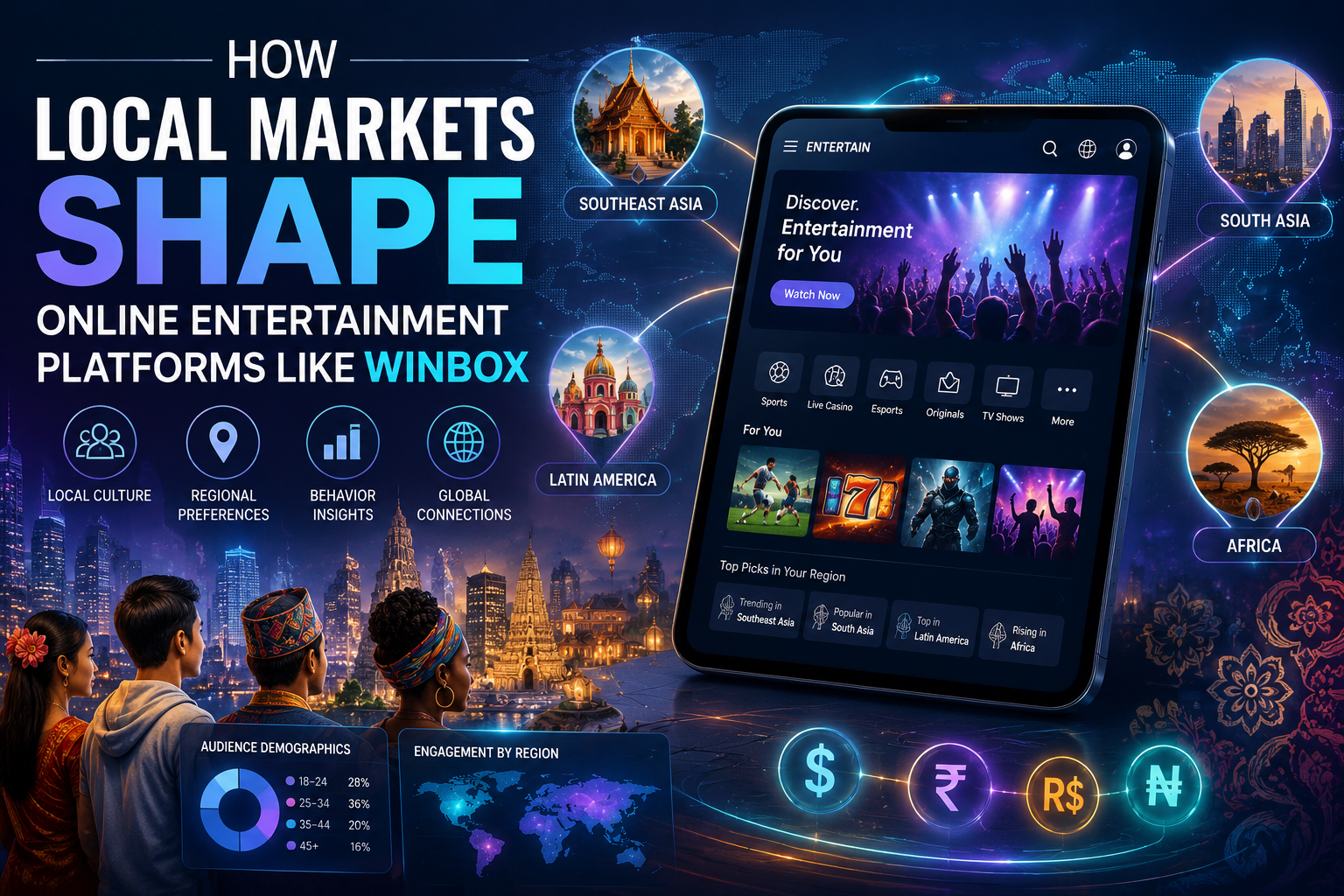
Online entertainment platforms are often discussed as if they were global and identical everywhere. In reality, the markets they serve differ a great deal, and successful platforms adapt to local conditions rather than ignoring them. Looking at how a platform fits its regional context says a lot about how seriously it takes its users.
Why local context matters
Several factors vary sharply from one market to another: which payment methods people trust, which devices and operating systems dominate, what languages users prefer, and which times of day see peak activity. A platform built for one region without adjustment will feel slightly off in another. A service such as Winbox operates within a regional context, and the platforms that perform best are generally the ones that reflect the habits and expectations of the users actually in front of them.
Payment and device preferences
Payment behaviour is one of the clearest examples. In some markets, users rely heavily on bank transfers and local e-wallets rather than international card networks. A platform that supports the payment options people already use removes friction, while one that does not loses users at a critical moment. Device preferences matter too — in much of Southeast Asia, Android holds a large share of the market, which influences how platforms prioritise their development and testing.
Language, support, and timing
Language and customer support are equally important. A platform serving Winbox Malaysia style audiences — that is, users in a specific national market — benefits from support that understands local languages, local time zones, and local expectations around response speed. Generic, time-zone-mismatched support tends to frustrate users, while locally aware support builds confidence and loyalty.
Responsible practice in a local frame
Local context also shapes responsible-use practices. Different markets have different norms and expectations around online entertainment, and platforms that take this seriously provide clear information, age-appropriate access controls, and easy-to-find guidance for users who want to manage their own activity. Treating responsible use as a genuine part of the product, rather than a checkbox, is a sign of a mature platform.
The takeaway
For users evaluating an online entertainment platform, local fit is a useful lens. Does the service support familiar payment methods? Does it work well on common devices? Is support available in the right language at the right times? A platform that answers these questions well has usually invested in understanding its audience — and that investment tends to show up everywhere else in the experience too.